Theology
The Processed
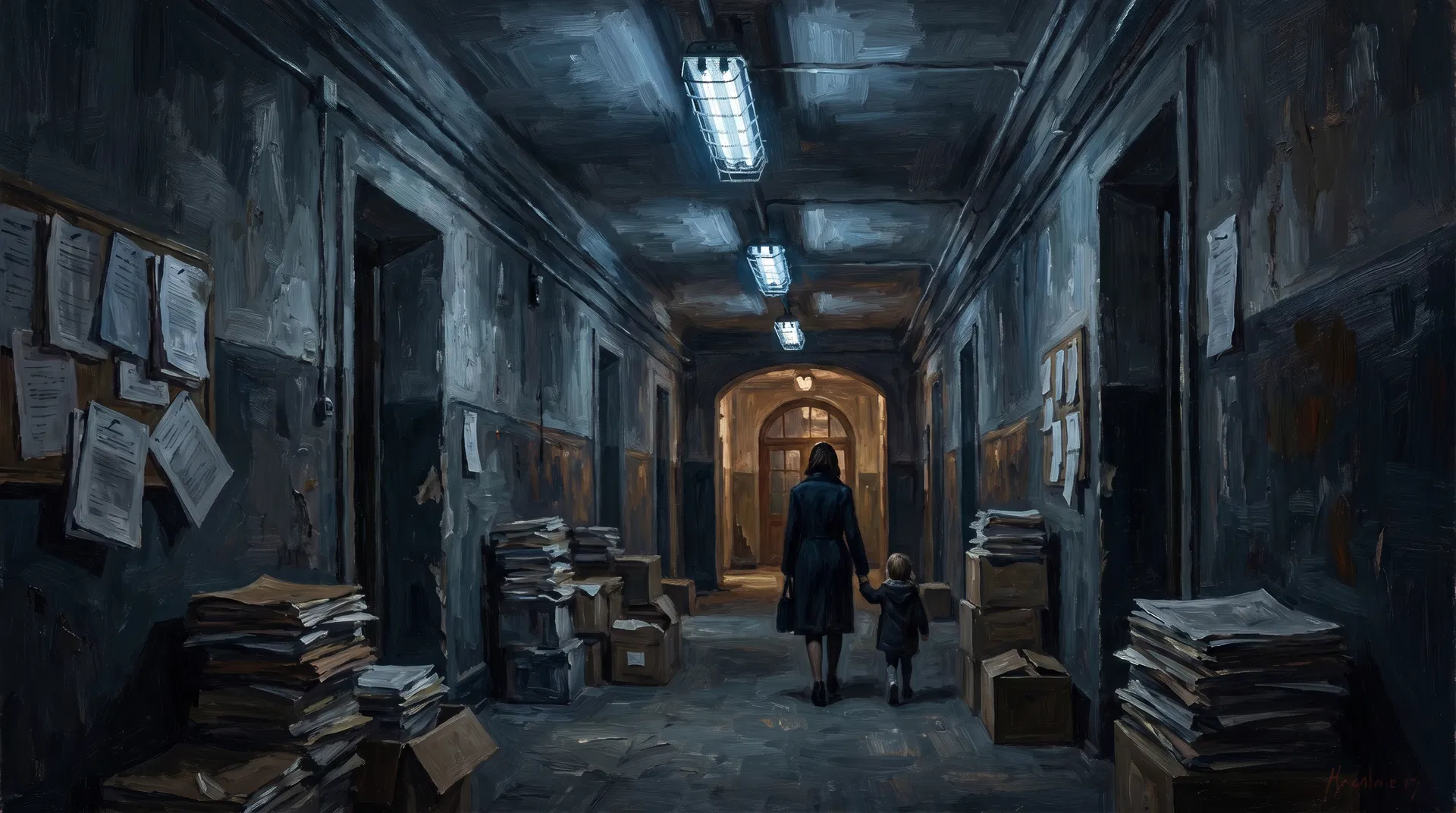
There are systems that do not look evil because they have learned how to sound righteous.
They do not come with horns. They come with forms. They come with policies. They come with order. They come with words like safety, stewardship, law, boundary, protection, and love. They come wrapped in Scripture. They come standing behind pulpits. They come holding Bibles in one hand and signing papers with the other.
And that is what this book lifts up.
Not simply injustice as violence. Not simply injustice as cruelty. But injustice made clean. Injustice made procedural. Injustice baptized until it can stand in a sanctuary and call itself faithfulness.
This story is about Luisa, who carries her son through fear, through heat, through loss, through the border, through the white lights that do not vary. It is about Tomás, seven years old, learning too early that silence can be survival. It is about Abdullahi, who builds a life one morning at a time — a grocery, a ledger, a wife, a son, a neighborhood, a rhythm — only to discover that eighteen years of faithfulness can be erased by a knock at 5:17am. It is about Khalid, born here, passport in the drawer, watching the system take his father anyway. It is about Myra, who has walked the floor long enough to know that the system is not broken. The system is working exactly as designed. That is the problem.
And it is about Crane.
Because Crane is not a cartoon villain. That would be too easy. Crane prays. Crane visits the dying. Crane loves his family. Crane believes he is doing the will of God. And that is what makes him terrifying.
The Dragon does not need people to stop believing in God. Sometimes the Dragon only needs people to believe in a god who blesses their fear, sanctifies their borders, excuses their indifference, and calls the suffering of the vulnerable the cost of order.
This book is not just about immigration. It is about empire. It is about theology. It is about what happens when the church confuses law with love, control with covenant, punishment with holiness, and silence with peace.
It asks us to look at the people the system has turned into numbers. To hear the names the forms were never built to hold. To see the mothers, the sons, the fathers, the workers, the children, the witnesses, the ones sitting against the wall, the ones waiting for a door to open.
Because the question is not only what the system does.
The question is what we call it.
Do we call it justice because it is legal?
Do we call it love because someone quoted Scripture over it?
Do we call it order because the paperwork is correct?
Or do we finally tell the truth?
The system works exactly as designed.
And that is why it must be judged.
That is why it must be named.
That is why the gate must be seen for what it is.
And that is why the Dragon must be exposed.