The Story of Job in Five Volumes
About the Series
There is a question wounded believers carry that they often cannot say out loud. Is God punishing me. It comes in hospital corridors, at gravesides, in the kitchen at three in the morning when the house has gone quiet and the body cannot sleep. It comes after the diagnosis, after the call, after the marriage that did not hold, after the child who did not come or came and did not stay. It comes for the good thing. It comes after the tearing. And once it comes, it brings a second sentence with it, half-spoken, half-believed: this only makes sense if I did something wrong.
This series is for the reader who has been carrying that question. It walks through the Book of Job in five volumes, slowly, scene by scene, with a wounded reader in mind on every page. It does not rush to resolution. It does not flatten the suffering. It does not require the reader to feel anything they do not yet feel. It sits with Job in the ashes for as long as the ashes require, and it walks beside the reader through the long middle that most readings of Job hurry past.
The four narrative books walk the wounded reader through Job's body, through the friends' speeches, through the wind, through the eye that sees, through the door open. They do this through scene and prose. They are pastoral in the deepest sense. A reader can finish the four books with their question quieted, their body held, their loss honored, and not be able to tell anyone what the books taught them. The teaching has gone into the body. It has not always gone into the language.
The fifth book is the doctrinal companion to the four. It gives the wounded reader the words for what the first four books did. It names the unified divine attribute the narrative books embody. It is the volume the pastor will preach from and the lay reader will return to when they want to articulate, after the experience of the first four books, what they have been walking through.
Together the five books are written for the people who search at three in the morning, the pastor who has run out of things to say at the bedside, the family member who has been told too many times that there must be a reason. Job does not solve the mystery. He teaches us how to speak inside it. These books are an invitation into that speaking. The wind has been rising for a long time. The voice is in the wind.
The Narrative Books
Four Volumes. One Journey.

Book One
Is God Testing Me?
The question arrives in the dark. Job sits in the ashes, and the reader sits with him. This is where the series begins — not with answers, but with the weight of the question itself.

Book Two
Friends
They came to comfort. They stayed to accuse. The friends speak with certainty about a God they have not met in the ashes. This book walks through their speeches and names what they got wrong.

Book Three
The Silence
Between the last friend's speech and the first word from the whirlwind, there is silence. This book sits in that silence. It does not rush past it. It teaches the reader how to remain when God has not yet spoken.

Book Four
The Encounter
The wind rises. The voice speaks. Job sees what he could not see before — not answers, but presence. This is the book where the question is not solved but held by the One who was never absent.
Save $4
Get All Four Books
The complete Story of Job in four volumes: Is God Testing Me?, Friends, The Silence, and The Encounter.
$24 for all four books — instead of $28 individually.
Free Companion Study
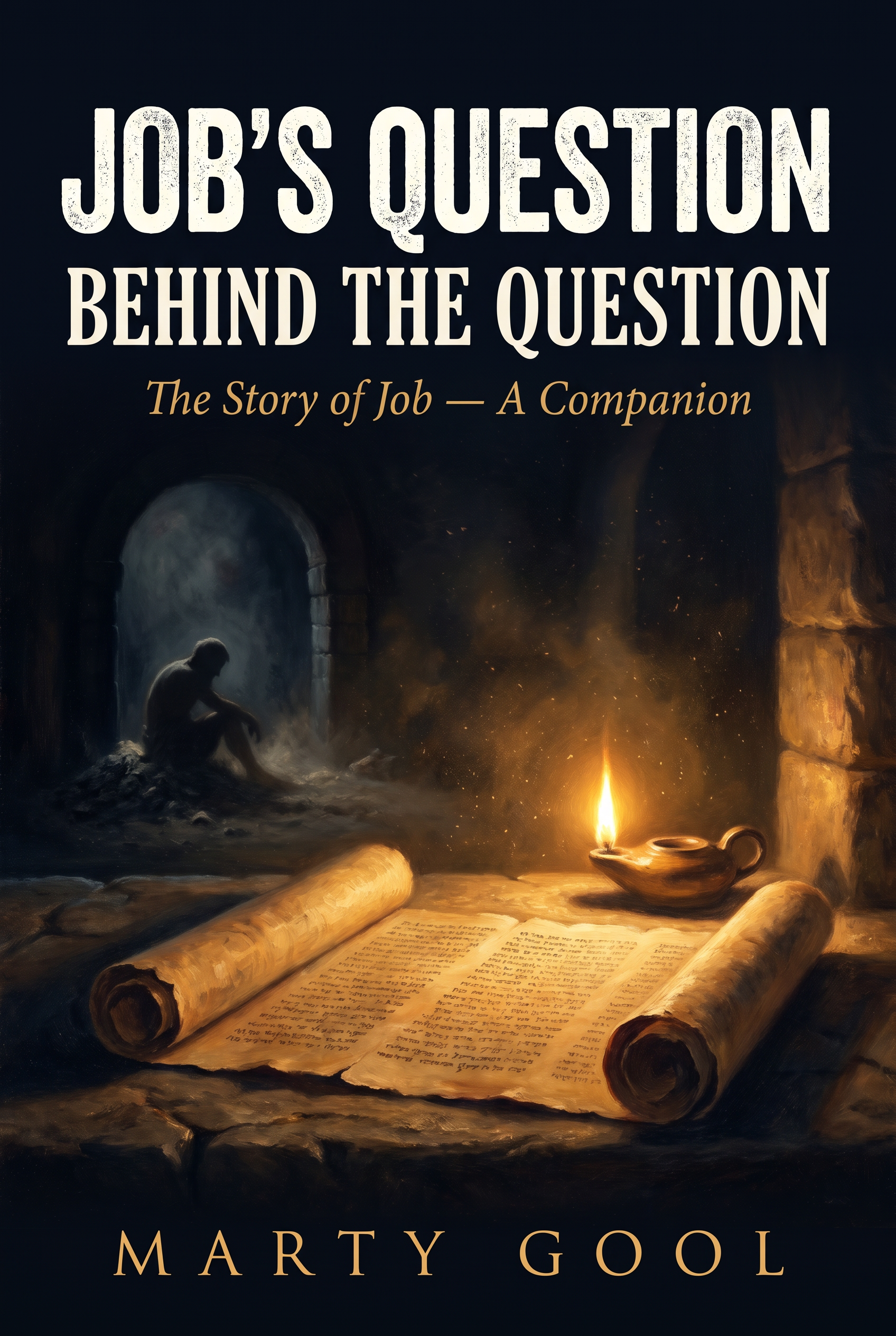
Job's Question Behind the Question
The doctrinal companion to the four narrative books. It gives the wounded reader the words for what the first four books did. It names the unified divine attribute the narrative books embody.
"Job does not solve the mystery. He teaches us how to speak inside it."
Marty Gool